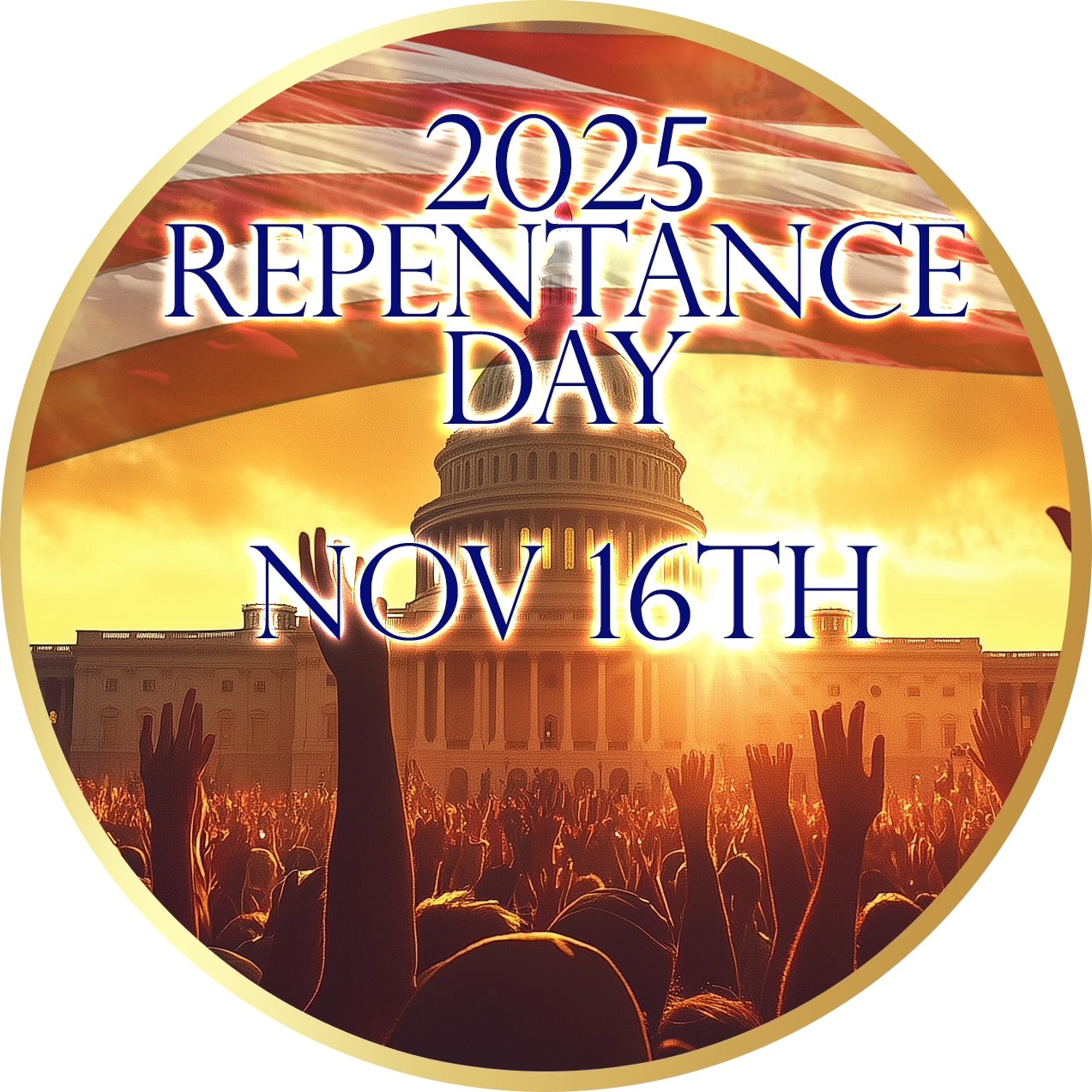

The History of Repentance Days in America
Throughout our nation’s history, American leaders have called upon the people to turn to God in times of crisis, recognizing that our strength and prosperity depend on divine providence. Two presidents, in moments of national peril, issued proclamations calling the nation to humble itself before Almighty God through prayer, fasting, and repentance.
President Abraham Lincoln’s Call to Repentance
March 30, 1863 – During the Civil War
In the midst of America’s bloodiest conflict, President Lincoln recognized that the nation’s division and suffering required more than military solutions. At the request of the Senate, he issued a profound proclamation calling for national humiliation, fasting, and prayer.
Lincoln’s proclamation acknowledged a sobering truth: In our prosperity, we had forgotten God. He wrote that America had received abundant blessings—peace, prosperity, growth in numbers, wealth, and power unlike any nation before. Yet in our success, we became intoxicated with pride, imagining these blessings came from our own wisdom and virtue rather than from God’s gracious hand.
The President’s message was clear: The calamity of civil war might be divine chastisement for our national sins, calling us to reformation as a people. He urged Americans to recognize their dependence on God’s overruling power, to confess their sins with humble sorrow, and to rest in the hope that genuine repentance leads to mercy and pardon.
Lincoln set aside April 30, 1863, asking all people to abstain from ordinary pursuits and unite in their places of worship and homes to keep the day holy. He expressed hope that the united cry of the nation would be heard and answered with pardon of national sins and restoration of the divided country to unity and peace.
His words echo today: “It behooves us, then, to humble ourselves before the offended Power, to confess our national sins, and to pray for clemency and forgiveness.”
President John Adams’ Proclamation
March 23, 1798 – In a Time of National Danger
Sixty-five years before Lincoln, President John Adams faced a different crisis—the threat of war with France and the spread of ideologies hostile to religious and moral foundations. He too recognized that the safety and prosperity of nations depend ultimately on God’s protection and blessing.
Adams proclaimed that acknowledging God’s governance is not merely a duty we owe to Him, but one that promotes the morality necessary for social happiness and the blessings of free government. This duty, he noted, becomes especially urgent in seasons of difficulty or danger.
On May 9, 1798, Adams called the nation to solemn humiliation, fasting, and prayer. He asked citizens to:
- Acknowledge before God the manifold sins with which we are justly chargeable as individuals and as a nation
- Beseech God’s infinite grace for remission of offenses
- Seek the Holy Spirit’s guidance toward sincere repentance and reformation
- Pray for protection from dangers threatening the country
- Ask that our civil and religious privileges be preserved
- Request that genuine piety and sound morality influence and govern the lives of all citizens
Adams emphasized that these solemn observances should be accompanied by fervent thanksgiving—not only for God’s protection and preservation of our freedoms, but for prospering us wonderfully and conferring many favors conducive to our happiness and prosperity as a nation.
The Enduring Principle
Both proclamations rest on the same biblical foundation: “Blessed is the nation whose God is the Lord.”
These two presidents, separated by decades and facing vastly different challenges, understood the same profound truth—that nations, like individuals, are accountable to God. They recognized that in times of crisis, the path forward requires more than human wisdom and effort. It requires humility before God, acknowledgment of our sins, genuine repentance, and earnest prayer for His mercy and guidance.
Their calls to national repentance were not mere religious formality. They were sincere pleas for divine intervention, born from the recognition that God alone has the power to heal, restore, and preserve a nation.
Why This Matters Today
Our nation once again faces deep division, moral confusion, and challenges that exceed our human capacity to resolve. The words of Lincoln and Adams speak across the centuries with startling relevance:
We too have received abundant blessings. We too risk forgetting the Source of those blessings. We too need to humble ourselves, confess our national sins, and seek God’s face.
The proclamations of these presidents remind us that throughout American history, our greatest leaders understood that national renewal begins with spiritual repentance. Their example calls us to follow the same path—turning back to God with humble hearts, seeking His forgiveness, and trusting in His power to heal our land
